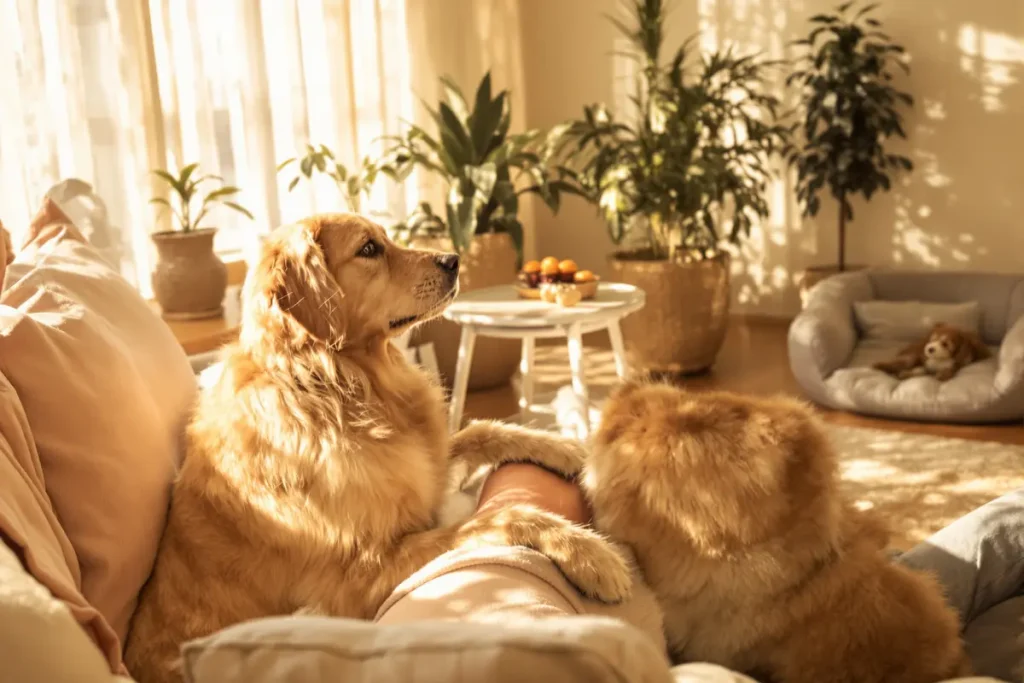
You’re sitting on the couch, half-focused on your screen, when suddenly—there it is. A soft paw on your arm. Your dog stares at you with those wide, patient eyes, asking for… what exactly? It might feel like a random gesture or a trick they learned. But animal experts say it’s something much deeper. That small moment could be packed with emotion—and even a cry for help.
Dogs don’t just “give paw”—they’re trying to connect
When your dog places its paw on you without you asking, it’s not always about being cute or playful. According to professional behaviorists, it’s a form of communication. But here’s the catch: dogs never speak with just one part of their body. That paw might be the most obvious gesture, but the message is actually written across their entire posture.
Is the tail wagging? Are the ears up or pinned back? Is the body tense or relaxed? These cues help unlock the real meaning behind the paw.
What your dog’s paw might really mean
The same paw gesture can have very different meanings depending on the situation. Here are a few common possibilities:
- Seeking affection: A light paw, soft eyes, calm breath—your dog might just be saying, “Stay here with me.”
- Feeling overwhelmed: A paw combined with fast breathing, lip licking, or a tucked tail could point to stress or fear.
- Trying to calm tension: Known as “calming signals,” some dogs use slow moves and soft contact to soothe themselves—or you—when things feel intense.
- Confusion or frustration: If your dog is pawing, whining, and stiff-bodied, they might be unsure of what’s happening and looking for reassurance.
Context is everything. What happened right before the paw landed on you? Noise? A guest arriving? An argument? That paw might not be random after all.
A simple pause can reveal everything
Experts recommend a quick pause when you feel that paw. Literally—pause for three seconds. Don’t talk, don’t move. Just observe your dog. Ask yourself:
- Eyes: Are they soft and blinking or wide and staring?
- Mouth: Relaxed or panting too fast?
- Tail: Wagging gently, held stiff, or tucked?
- Paw pressure: Is it light and brief, or heavy and repetitive?
- Surroundings: Is the mood upbeat, tense, noisy, or calm?
These clues help you decide whether to offer more cuddles, give the dog space, or remove something that’s causing distress.
What NOT to do: avoid sending mixed signals
One of the biggest mistakes owners make is rewarding the wrong behavior. For instance:
- Your dog barks at a sound outside, then paws at you while still excited. You pet him instinctively. Your dog now learns that barking plus pawing = attention.
- Your anxious dog paws at you during a stressful moment, like at the vet. You pull away unknowingly. They learn that reaching out gets them ignored in scary moments.
The key? Reinforce calm behavior and guide your dog gently during stressful ones. Building trust starts with reading them better.
When a paw is more than just a trick
Yes, the “shake” command is still a fun and harmless trick. And you can absolutely teach it. But it’s important to separate trained cues from emotional messages.
If your dog offers a paw during training, that’s one thing. If they do it while you’re deep in a loud conversation or during a tense scene at home, that’s something else entirely—and worth paying attention to.
Real-life example: not clingy, just overwhelmed
An animal therapist shared one enlightening story. A family complained that their Golden Retriever was too “needy”—pawing at them constantly while they watched TV. But when observed closely, the dog’s body language told a different story: panting, yawning often, tail down, ears back.
Turns out, the dog was overwhelmed by the household energy at night. The paw wasn’t a demand. It was a call for help.
FAQ: Quick answers to common questions
Why does my dog give me its paw when I stop petting?
Your dog may have learned that the paw acts like a “continue please” button. If they’re relaxed and you’re enjoying the bonding time, it’s their polite way of asking for more.
What if my dog paws and whines at the same time?
Look around. There may be something bothering them: a closed door, a noisy space, or shifting energy at home. It’s not always a request to play—it may be a sign of emotional tension or discomfort.
Is giving the paw a dominance move?
No. Modern behavior experts don’t support old dominance theories in these contexts. A dog giving a paw is expressing a need, not asserting control.
Should I ignore the behavior?
Not all the time. Ignore the paw if it’s born out of pushy or overly excited energy. But respond gently when it shows up with anxiety or uncertainty.
Can I still teach “shake”?
Of course. Just make sure to keep trick training separate from moments of real emotion. A trained trick doesn’t cancel the meaning behind raw, heartfelt gestures.
Final thought: read the question before you answer
One expert summed it up best: “When a dog gives you its paw without being asked, I don’t see a trick—I see a question.”
Every paw touch is a line in a longer, more complex story. The more you learn to read those signs—the relaxed tails, or the pleading eyes—the stronger the bond becomes between you and your dog. Because sometimes, the smallest gesture says the most.