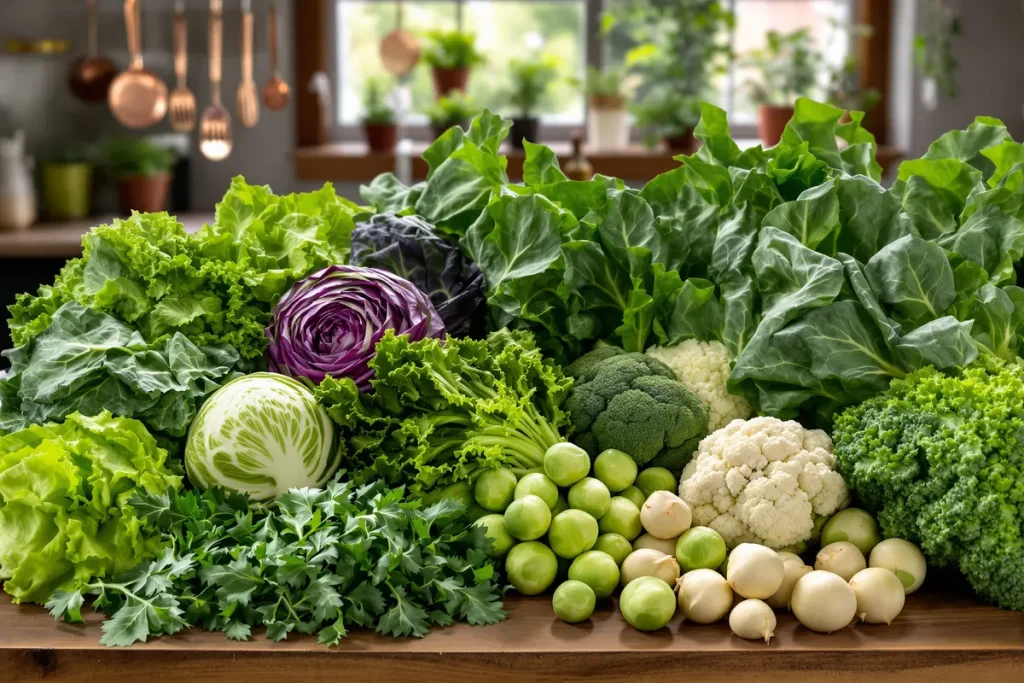
It might come as a shock, but that broccoli, cauliflower, cabbage and even Brussels sprouts you’ve been eating? They’re all the same plant. That’s right—what looks like a variety of different veggies is actually just one species wearing different outfits. Curious yet? Let’s dig into one of nature’s most surprising food facts.
Meet Brassica oleracea: the master of disguise
All these vegetables you see lining produce aisles—broccoli, kale, cauliflower, cabbage, Brussels sprouts and even collard greens—are cultivated forms of a single species: Brassica oleracea. Imagine turning one plant into a variety of textures, shapes and flavors. This is a real triumph of human plant breeding.
So how did we end up with a whole dinner plate from one species? Through selective breeding over centuries, farmers chose specific traits to magnify. The results are what you now call vegetables:
- Cabbage: bred for large, leafy heads
- Broccoli: developed for its large flower buds
- Cauliflower: also flower-based, but with dense, curdy blooms
- Brussels sprouts: formed from enlarged buds along the stem
- Kale: selected for its nutritious, leafy greens
- Kohlrabi: bred for a thick, root-like stem
It’s not magic—it’s just biology meets smart agriculture.
Why appearance doesn’t mean different genetics
It’s easy to believe these veggies are completely different species because they look and taste so distinct. But genetically, they’re siblings. Plant breeders over hundreds—even thousands—of years nudged Brassica oleracea into growing specific parts bigger or differently.
They wanted bigger leaves? We got kale and cabbage. More edible flowers? Hello, broccoli and cauliflower. Tiny cabbages growing on a stalk? That’s Brussels sprouts.
The changes weren’t because of different DNA strands per se, but because certain traits were emphasized. Kind of like how all dog breeds—from a Chihuahua to a Great Dane—come from the same species, but were bred for different looks and behaviors.
Your dinner plate: a lesson in evolution
When you serve broccoli with roasted Brussels sprouts and a side of coleslaw (made with cabbage), you might think you’re offering variety. But you’re actually serving a single species in multiple disguises. It’s like having six outfits made from the same fabric.
And while they look different, they still share certain traits. Most are cool-weather crops. They all belong to the cruciferous vegetable family, which has compounds like glucosinolates—those pungent, slightly bitter flavors and potential anti-cancer properties.
Wait—what about kale and collard greens?
Yes, them too! Kale and collard greens are also leafy variations of Brassica oleracea. Kale has curly or flat leaves, often darker green, while collards have broad, smooth leaves. Both were bred for abundant, edible foliage without forming heads like cabbage. And yes, they’re still in the same veggie family tree.
Why this matters for your health and your meals
Knowing these vegetables are all cousins helps you make smarter choices. If you’re eating broccoli three times a week and also snacking on cabbage slaw, you might not be getting as much variety as you thought.
Here’s a tip: mix in different plant families to expand your nutrition. Add sweet potatoes (a tuber), green beans (a legume), or bell peppers (a nightshade) to rotate your nutrients and avoid overloading on one group’s specific compounds.
Still love your Brassica mix? No problem—each form does offer slightly different fiber, vitamin, and antioxidant levels. Just be mindful that your “variety” might be a bit of a delicious illusion.
A genius case of crop mastery
This whole story is a mind-blowing example of how humans shaped nature. Long before we had genetic engineering, farmers were doing it manually by selecting the best plants over generations. That one wild Mediterranean plant—Brassica oleracea—stood out for one simple reason: it responded well to human nudging.
At first, it was just a wild leafy plant on rocky cliffs. People noticed it had edible leaves. So they grew more. Eventually, they started favoring plants with bigger heads—the beginning of cabbage. Someone else picked ones with tasty flower buds—now you’ve got broccoli. And so on, evolving naturally yet intentionally.
Final bite: what’s on your fork?
It’s kind of poetic, isn’t it? You think you’re eating a mix of plants, but you’re really feasting on the shape-shifting abilities of one genius species. Next time you look at a plate full of bright green sprouts, creamy cauliflower mash, or crispy kale chips—remember they’re all different expressions of the same DNA.
That’s not just surprising. It’s a reminder of how our food system is filled with centuries of human curiosity, creativity, and experimentation.
So go ahead—admire your broccoli. Just know that it shares more than a dinner plate with cabbage. They’re practically twins.